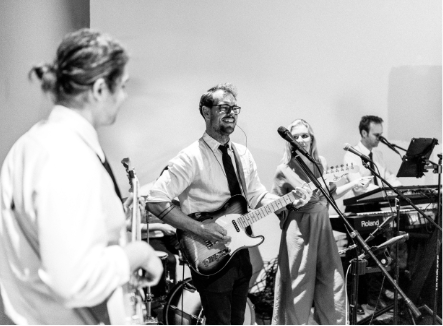
How Reception Music Shapes the Flow of Your Evening
Reception music isn't just background noise; it actively shapes how guests move through the evening's different phases. The energy during dinner is naturally lower, giving guests space to talk and eat, while the shift toward dancing later on requires a noticeable change in tempo and volume. Understanding this arc helps couples plan music that supports rather than fights against the natural rhythm of the night.
A well-structured reception typically moves through several distinct phases: guest entrance, dinner, speeches, first dances, and open dancing. Each phase calls for a different musical approach, and reception music that ignores these shifts can feel out of sync with what's actually happening in the room at any given moment.
Transitions between these phases are often where reception music matters most. A band or DJ who can smoothly shift from a quiet dinner soundtrack into an energetic dance set, without an awkward gap or jarring change, helps maintain momentum rather than letting the room's energy dip unnecessarily between segments.
Guest engagement tends to follow the lead of the music itself. When reception music builds gradually and reads the room well, guests are more likely to stay engaged and head to the dance floor when the moment feels right. Conversely, music that peaks too early or doesn't adjust to the crowd can leave a dance floor emptier than couples hoped for.
Live wedding music offers a particular advantage here, since musicians can adjust in real time based on how guests are actually responding. Red Soda Band approaches reception sets with this flexibility in mind, aiming to build energy naturally across the evening rather than following a rigid, predetermined sequence regardless of the room's mood.
Dinner Hour: Setting the Right Musical Tone
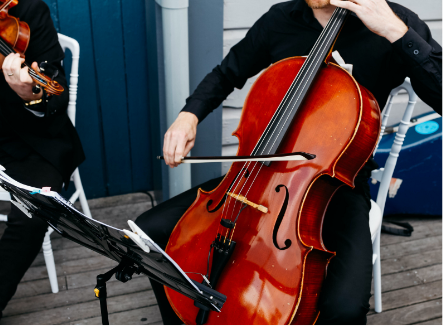
Dinner entertainment calls for a noticeably different approach than later dance sets, since the primary goal during this segment is to support conversation rather than demand attention. Softer instrumental arrangements or lower-volume live music tend to work well, allowing guests to talk comfortably while still enjoying a pleasant musical backdrop throughout the meal.
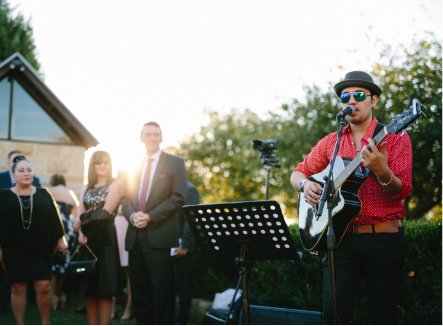
Many couples choose acoustic or lightly arranged versions of familiar songs for dinner, striking a balance between recognizable music and a relaxed atmosphere. This segment often showcases a band's versatility, since musicians frequently transition from this quieter style into a fuller, higher-energy sound once dinner concludes and speeches wrap up.
Volume management is particularly important during dinner, since music that's too loud can make conversation difficult and detract from the dining experience. Experienced live musicians typically adjust their sound levels specifically for this portion of the reception, reading the room to strike the right balance between ambiance and audibility.
Speeches usually fall within or immediately after the dinner segment, and reception music needs to accommodate this pause naturally. A band experienced with wedding timelines knows how to lower volume or step back entirely during toasts, then smoothly return to a musical backdrop once speeches conclude without disrupting the flow of the evening.
The transition out of dinner and into the next phase of the reception is worth planning deliberately. Some couples use a specific song or tempo shift to signal this change, helping guests mentally prepare for the shift from a seated, conversational atmosphere toward a more active, dance-focused portion of the night.
First Dances and Special Moments
First dance music is often chosen well before other parts of the reception playlist, since it's one of the most personal and photographed moments of the night. Whether couples opt for a classic ballad or a more contemporary song, having it performed live adds a layer of intimacy that a recorded track typically doesn't replicate in the same way.
Parent dances, such as a father-daughter or mother-son dance, usually follow shortly after the couple's first dance and deserve similar attention in planning. These moments often carry significant emotional weight, and coordinating song choice and timing with your band or musicians in advance helps ensure the moment unfolds smoothly.
Cake cutting and other reception traditions sometimes come with their own musical cues, whether a short instrumental piece or a specific requested song. Clarifying these moments ahead of time with your live band helps avoid confusion about timing and ensures the music supports rather than competes with what's happening in the room.
Song arrangement matters for these special moments more than for general reception music. A band that takes time to properly learn or arrange a first dance song, rather than performing it generically, tends to deliver a more meaningful live performance that feels tailored specifically to the couple rather than interchangeable with any other wedding.
Coordinating these special moments within the broader reception timeline requires clear communication between couples and musicians well ahead of the wedding date. Providing a detailed timeline that outlines when each moment should occur helps ensure smooth transitions and reduces the chance of any awkward gaps or mistimed cues during the reception.
Building Momentum Toward the Dance Floor
Once formalities like speeches and cake cutting wrap up, reception music typically shifts toward building sustained energy for an extended dancing portion of the night. This transition is often gradual rather than immediate, with tempo and volume increasing incrementally to naturally draw guests from their seats toward the dance floor.
Song selection during this build-up phase often blends familiar, broadly appealing tracks with slightly higher energy than the dinner segment, without jumping straight to the most intense dance-floor hits. This pacing helps ease guests into a more active mood rather than expecting an immediate shift from quiet conversation to full dancing.
Reading the room becomes especially important during this transitional stretch. A band or musicians experienced with wedding receptions can sense when guests are ready to move toward the dance floor and adjust their set accordingly, rather than following a fixed sequence regardless of how the room is actually responding.
Genre variety plays a meaningful role in this build-up as well, since different groups of guests often respond to different styles of music. Weaving between eras and genres during this phase helps engage a broader range of guests, increasing the likelihood that more people head toward the dance floor as energy continues to build.
This phase is often where live wedding bands demonstrate their value most clearly, since the ability to adjust pacing in real time based on guest response is difficult to replicate with a fixed playlist. Bands accustomed to Toronto wedding receptions tend to have a strong sense of how to manage this build-up effectively.
Keeping the Dance Floor Full During Peak Hours
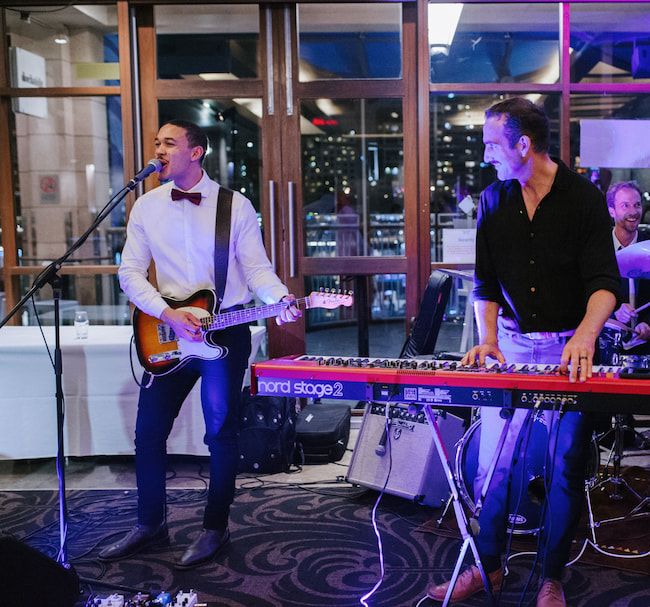
Peak dance-floor hours typically represent the highest-energy portion of the reception, and song selection during this stretch matters significantly. A strong mix of proven, widely recognized dance songs, balanced with the couple's specific requests, tends to keep the widest range of guests engaged and moving throughout this extended segment.
Set pacing during peak hours requires careful attention, since maintaining consistently high energy for hours at a time isn't as simple as playing only fast, upbeat songs back-to-back. Experienced bands often build in brief tempo variations or short breathers within the set to prevent guest fatigue while still sustaining overall momentum.
Crowd interaction becomes particularly valuable during this portion of the reception. Musicians who actively engage with guests, whether through direct interaction or simply visible energy on stage, tend to sustain dance-floor participation more effectively than a band that performs well but remains disconnected from the room's energy.
Guest requests often come in during this peak stretch, and how a band handles these requests can meaningfully affect the overall atmosphere. Some bands incorporate spontaneous requests smoothly into their existing set, while others prefer maintaining a planned structure; clarifying this preference in advance helps set expectations for the evening.
Equipment and sound quality also play a significant role during peak hours, since a packed dance floor with subpar audio can undercut even the best song selection. A professional wedding band bringing quality sound equipment and clear vocal mixing helps ensure the energy built throughout the evening translates into an genuinely enjoyable dance experience for guests.
Choosing Between a Live Band and Other Reception Music Options
Live bands offer a level of real-time responsiveness that other reception music options, such as a fixed playlist, generally can't match. The ability to read a room and adjust tempo, energy, or song selection in the moment is one of the primary reasons couples choose live wedding music specifically for their reception rather than recorded alternatives.
DJs offer their own advantages, including a typically broader song catalogue and often lower cost compared to a full live band. Some couples choose to combine both, using a DJ for certain segments and a live band for others, though this requires careful coordination to ensure smooth transitions between the two.
Budget considerations naturally factor into this decision, since live bands, particularly larger ensembles, typically involve higher costs than DJ services. Couples should weigh this against how much value they place on live performance energy versus the broader flexibility and often lower cost that DJ services can provide.
Venue considerations also play a role in this decision, since some Toronto wedding venues have specific space, power, or noise requirements that may favor one option over the other. Discussing your venue's specifics with prospective bands or DJs helps clarify which option realistically fits your particular setting.
Ultimately, the right choice often comes down to what atmosphere couples want to create. For those specifically seeking live wedding music with the kind of adaptability and stage presence that comes from real musicians performing in the moment, a band like Red Soda Band offers an option built around that responsive, high-energy reception experience.
Planning Your Reception Music Timeline
Building a detailed reception timeline in advance helps ensure music transitions smoothly between each phase of the evening. This typically includes guest entrance, dinner, speeches, first dances, and the extended dancing portion, with rough time estimates for each segment to guide your band or musicians throughout the night.
Sharing this timeline with your band well before the wedding date allows them to plan pacing and song selection accordingly. Most experienced wedding bands request this kind of planning document or conduct a detailed consultation call closer to the event to gather these specifics and ensure alignment on how the evening should unfold.
Communicating any special moments, such as parent dances, surprise performances, or specific songs tied to meaningful traditions, is an important part of this planning process. Providing this information in advance gives musicians time to prepare or arrange these pieces properly rather than working from a last-minute request.
It's also worth discussing contingency plans with your band, such as how they'll handle a timeline running behind schedule due to extended speeches or other delays. Bands experienced with live wedding receptions typically have strategies for adjusting on the fly without losing the overall energy or structure of the planned set.
Finally, reviewing your reception music plan a few weeks before the wedding date, rather than leaving all details to the last minute, helps ensure everyone involved, from your band to your venue coordinator, is aligned on how the evening's music should flow from start to finish.